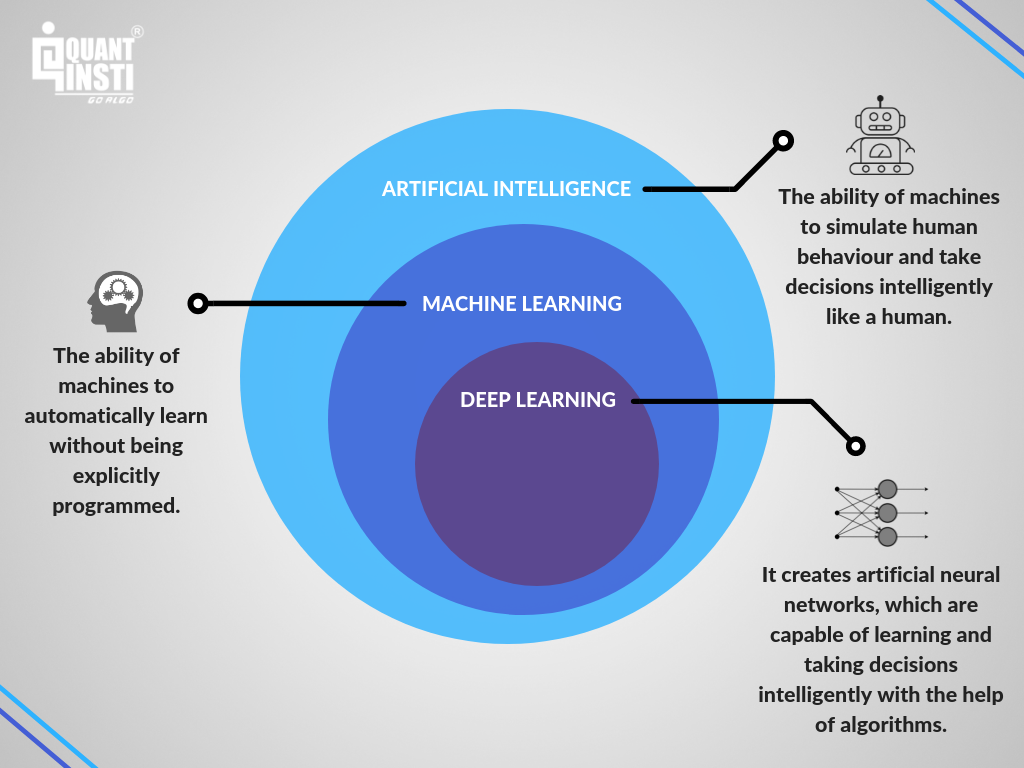
In this seminar, the major question we were given was “How do machines learn”. It was important that we form our own groups to discuss the many ways that machines can learn, then using this knowledge to create a poster to present to the rest of the class to explain our ideas. But, firstly we were presented with an image of a windmill, used as an example to intrigue our minds as to how it may function in order to prepare us to tackle the big question. Whilst some of us were attempting to develop our own explanations from our previous experiences, others were assigned the role to research any information using one device that could help benefit our answer to become as accurate as possible.
Some key points we discovered from our research include the following:
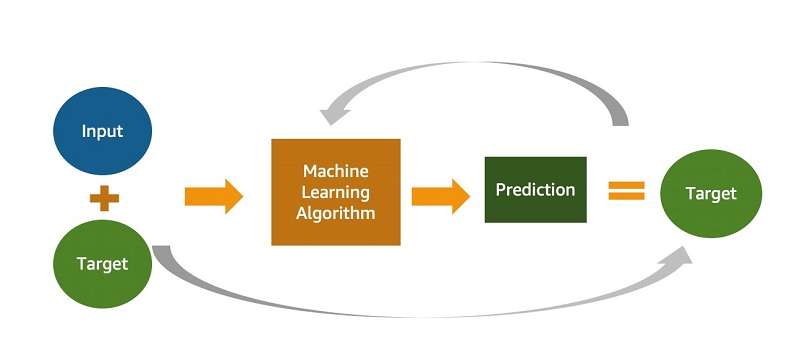
- machines can learn by searching for patterns in large data loads, and the more data that was exposed to the machine the smarter it would become.
- looks at data to find relevant information and stores this information through repetition
- it has become essential in modern day industry, they are vital in medicine, healthcare and manufacturing etc.
Once we had completed our research on how machines learn, we then came together as a class to discuss in our groups the different points we covered. In particular, the importance of human input which comes in the form of code and is usually fed into the computer and directs the computer on what to do. Machine code consists of binary digits (ones and zeros) this is translated into this value so that the computer is able to execute them. Therefore, the information that is stored by human input is then assigned a binary number by the ASCII code to allow the machine to apply the final result.
Some examples are listed below:
- Character A (01000001)
- Character B (01000010)
- Character C (01000011)
- Character D (01000100)
Although, what came of interest to me was how the human brain is very closely aligned to computers. This is due to the fact that while the brain uses chemical signals to transmit information, the computer uses electricity that travels through wires. But, ultimately both use electrical signals to send messages. Another similarity, is the ability that both can receive data usually through instruction, operate on the data through analysing and translation then generate an output. Furthermore, both have the ability to improve on performance, while humans are always learning during experiences in the environment we can then adapt to the new information presented. In the same way, computers can learn and understand our preferences by carrying out lots of activities over time, data is then analysed to search for patterns and based on this the computer automatically improves it’s performance to be able to recommend more relevant information suited to us this can be shown in suggested adverts which is determined from our previous searches. However, unlike computers which are encoded with data that is directly given through human input to function according to the way that they have stored this, we are capable of forming our own opinions and viewpoints as humans which machines are not able to do.
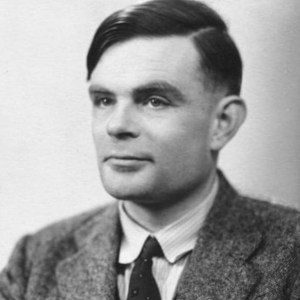
Who is Alan Turing?
Alan Turing was a British scientist and a pioneer in computer science. During the Second World War, Turing developed a machine known as the ‘Bombe’ he worked to decrypt the German naval communications and break the complex Enigma code on the machine, this was used by german forces to send messages and they considered it unbreakable.
Furthermore, Turing was also known for creating the Turing Test which was a method based on artificial intelligence (AI) to establish whether computers have the ability to think like a human being. He suggested that a computer can possess artificial intelligence if it can imitate human actions under particular conditions. Therefore, if a machine such as Siri can converse with a human being but isn’t recognised as a machine, it has displayed human intelligence. However, in order to do this it must be able to generate it’s own thoughts and be able to demonstrate a full conversation convincingly. Although, to some some extent machines are somewhat similar to humans in terms of receiving information and forming an output, they still lack the emotional element that human beings have, this means that computers have a fixed way of operating through instruction unlike humans who have free-will and autonomy to develop their own views and act on them.
A concept known as the Turing machine was a further development by Alan Turing and devised for solving mathematical functions. His idea of several Turing machines, each corresponding to different methods or algorithms and written as a set of instructions, the interpreting of the work was regarded as a mechanical process and while the machine consisted of the algorithm it was able to carry out all possible tasks.
 Maryam’s blog