A conservative definition for the role of a teacher would typically include helping students to learn through delivering classroom instruction, preparing effective lessons, offering feedback when grading work, managing materials and following the standardised curriculum. However, sharing knowledge on a particular subject is a very traditional view for a teacher’s role, it seems there is much more to the ever-changing role of a teacher than just delivering content.
In this week’s workshop, we discussed in groups the different qualities and characteristics a primary school teacher should embody with the aim of achieving a more productive learning environment. Here is a list of the many qualities we came up with:
- Inclusive
- Good communicator
- Patience
- Problem- solver
- Supportive
- Organised
- Innovative
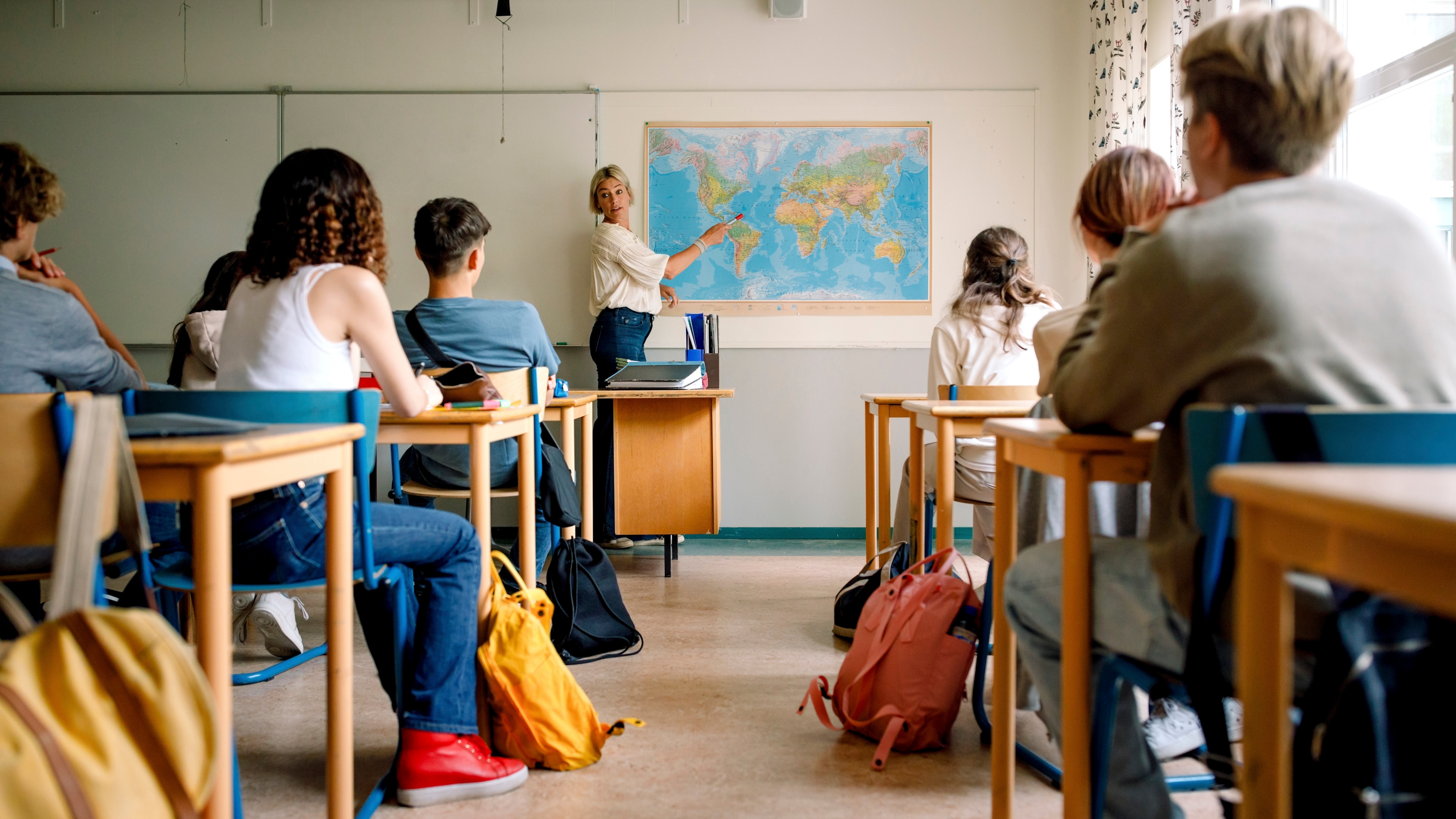
Regarding the role of a teacher involves more than carrying out lesson plans and teaching the basic curriculum through instruction, this may not be the most suitable approach for all pupils as teachers should acknowledge the fact that every student learns differently as a result they must be able to develop plans that are tailored to students needs and abilities. For example, the constructivist theory is ‘an approach to learning that holds that people actively construct or make their own knowledge and that reality is determined by the experiences of the learner’ (Elliott et al., 2000). Furthermore, a child- centred approach places the child in the centre of the process in which they are active and productive, this also involves giving a choice in learning activities while the teacher is perceived as a facilitator of learning. These theories portray a more accepting and broad- minded view on learning which is crucial for teachers to implement in lessons as it suggests they understand their students on a personal level so that they’re able to use different approaches that is beneficial for them.
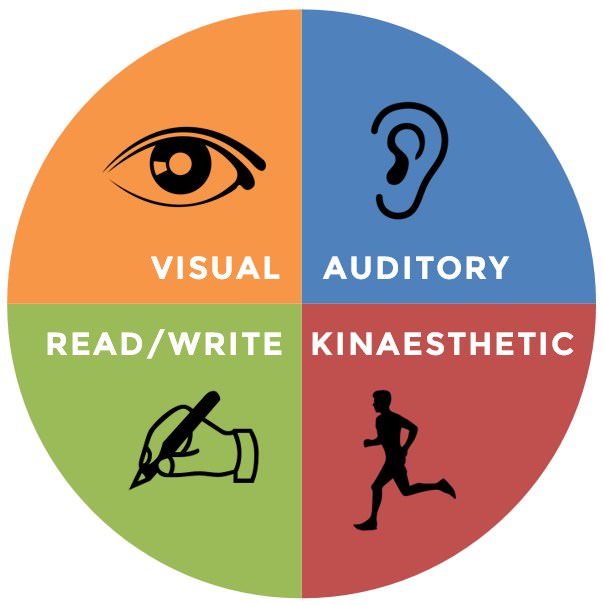
Moreover, I believe it’s important for teachers to understand the different learning styles suited to each individual. Reflecting back on my own experience of primary school it was very interesting to see the different teaching methods that were introduced as well as the delivery of lesson materials, but in particular I remember taking a questionnaire in order to determine the learning style most suited to me. Personally, this seems important for the student but also teachers so that they’re able to understand how each child learns in their own specific way and so they’re able to cater to that learner. The four learning styles include:
- Visual learners- prefers to observe materials such as pictures and diagrams, they understand information better when presented in a visual way
- Auditory- When subject matter is reinforced by sound, enjoy listening and using their voices to introduce new concepts
- Kinaesthetic– learning by experiencing things, involved in more ‘hands- on’ learning
- Reading/Writing– drawn to learning that includes writing, articles, books and searching up words
Click the link to the questionnaire and find out what learning style is best suited to you:
In a later discussion, we were asked ‘What would you expect teaching to look like in 2050?’ this was a difficult question as no one knows what the future holds, although based on current developments we can assume what may be produced in later years. For example, some suggested that teaching will be reduced to the simple factor that is technology therefore, we will no longer consider writing as digital classrooms will be more prevalent. Similarly, some argued that teachers will have a minor role in giving instruction and artificial intelligence will dominate as a result the need for teachers will decrease as technology will rule the world. Further, independent learning will become more common and teachers won’t need to facilitate learning as pupils will rely on their self. The use of zoom calls to engage with other students and to help teachers execute lessons when they’re unable to attend in person, but also VR headsets may be more commonly involved within lessons so that teachers are able to incorporate more realistic and visual learning for pupils in classrooms.
References:
Cox, J. (2020) What Is the Role of a Teacher?Available at: https://www.thoughtco.com/what-is-the-role-of-a-teacher-2081511 (Accessed: 1 December 2021).
McLeod, S. (2019) Constructivism as a theory for teaching and learning. Available at: https://www.simplypsychology.org/constructivism.html (Accessed: 1 December 2021).
Malvik, C. (2020) 4 Types of Learning Styles : How to Accommodate a Diverse Group of Students. Available at: https://www.rasmussen.edu/degrees/education/blog/types-of-learning-styles/ (Accessed: 2 December 2021).
 Maryam’s blog